


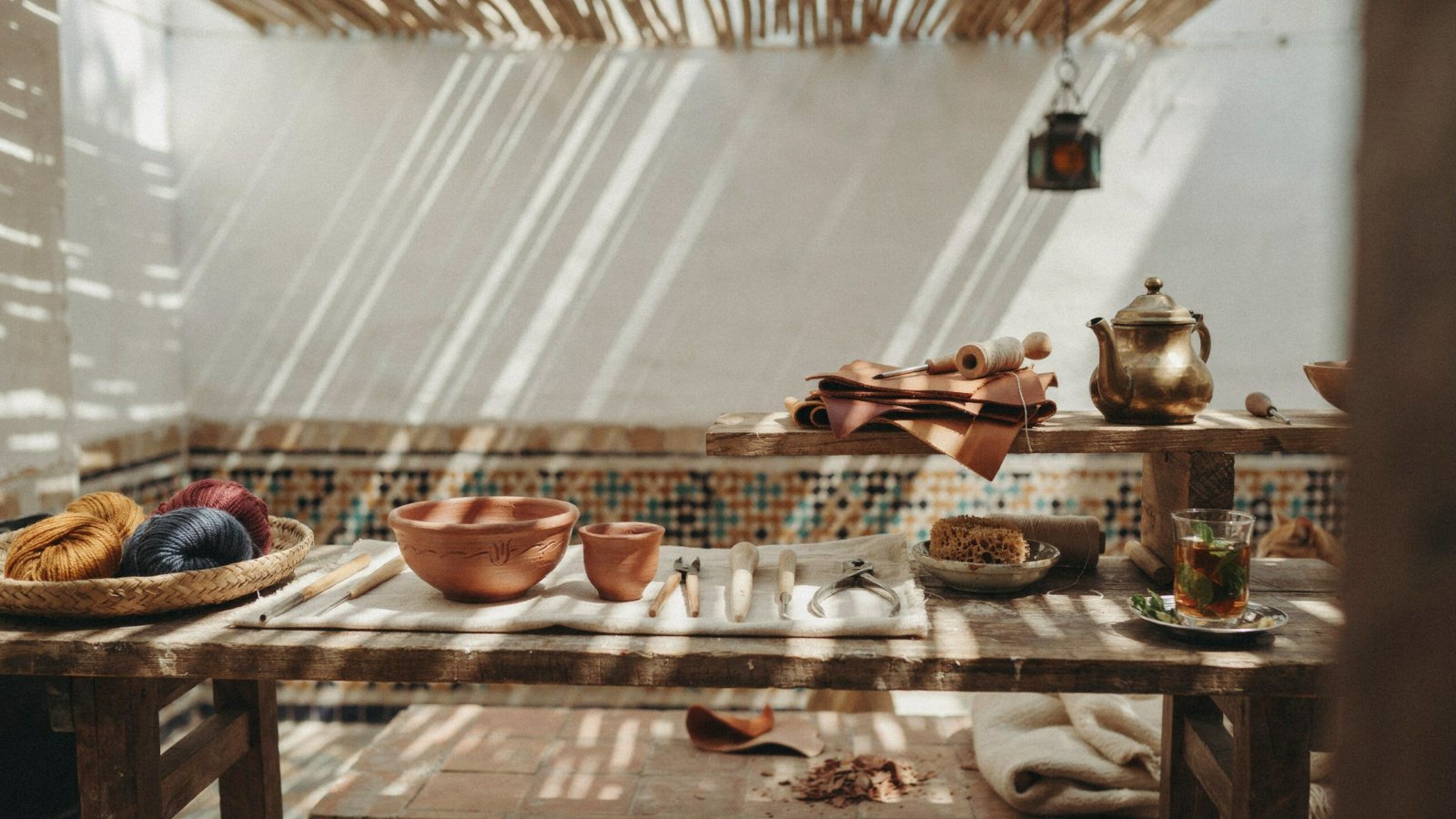

A Marrakech Workshop rarely comes with a fixed, predictable price tag. Two travelers can book what sounds like the same pottery session and pay wildly different amounts, and neither is necessarily being overcharged. The gap comes down to materials, time, location, group size, and the invisible overhead of running a hands-on experience inside a working medina. Understanding those factors is the difference between a fair deal and a confusing one. This guide breaks down the real cost drivers behind a Marrakech Workshop so you can plan your budget with confidence instead of guesswork.
Why a Marrakech Workshop Costs What It Costs
Most people assume the price of a craft session is mostly the craft. In reality, the raw material is just one strand. A workshop is a small production line: an artisan’s hours, a space to work in, tools that wear out, tea and snacks, sometimes a translator, and the logistics of getting a group seated and equipped in a city where nothing moves quickly.
When you compare a Marrakech Workshop to a simple museum ticket, you are not paying for access. You are paying for someone’s hands-on attention, and that attention is finite. That single fact explains most of the pricing variation you will encounter.
The Main Factors That Move the Price
Materials and Consumables
Clay, glazes, leather, dyes, wool, silver, and argan nuts all cost money, and quality varies enormously. A zellige or pottery session with proper firing and glazing will always sit higher than a quick paint-and-take session. Ask what is included and what you take home.
Group Size and Personal Attention
A private session for two costs far more per person than a shared table of ten. Neither is better; they serve different budgets. If you want hands-on correction from the artisan, expect to pay for the smaller group.
Duration and Depth
Two hours is a taster. Half a day is a skill. Full-day experiences with a lunch break and a finished object usually justify their higher price, because labour hours multiply.
Location and Setting
A workshop tucked in a working artisan’s courtyard in the medina carries different overheads than one in a purpose-built studio outside the walls. Both are authentic; the rent is not.
What You Are Really Paying For
Break a typical price into rough buckets and the logic becomes clear:
- Materials and tools — the physical things you touch and use up.
- Artisan time and expertise — the years behind the technique being taught.
- Space and setup — the room, the equipment, the cleaning afterward.
- Hospitality — tea, snacks, sometimes a meal.
- Logistics and booking — coordination, translation, and the margin of the organiser.
Once you see these buckets, a higher price is not automatically a rip-off, and a very low price usually means something has been trimmed. Often that something is the artisan’s time, or the quality of what you take home.
How to Build a Realistic Workshop Budget
Set aside a range rather than a single number. A short introductory session sits at the low end, while private, multi-hour, material-heavy experiences sit at the top. Add a small buffer for the practical extras that always appear:
- A tip for the artisan if the experience was genuinely good.
- Transport to and from the studio, especially outside the medina.
- Shipping or packing if your finished piece is fragile.
- A little extra if you fall in love with a tool or a finished item for sale.
If you are weighing several experiences, our hands-on cultural experiences in Marrakech are a good place to compare what each one actually includes before you commit.
Signs of Good Value (and Red Flags)
Good value looks like a clear list of what is included, a realistic group size, an artisan who is visibly present and teaching, and a finished object you can carry home. Red flags are vagueness about materials, a price that seems to include everything with no detail, and pressure to book on the spot without questions.
Ask directly: how many people, how long, what do I make, and do I keep it? Anyone running an honest workshop will answer without hesitation.
Getting the Most From Every Dirham
Budgeting for a Marrakech Workshop is less about hunting the cheapest option and more about matching the price to what you value. If you want a keepsake, pay for materials and firing. If you want technique, pay for a small group and a longer session. If you simply want a memorable afternoon, a shorter shared class is perfect.
The smartest travelers ask what the money buys before they ask what it costs. Do that, and your budget becomes a tool for choosing well rather than a source of stress. Compare options, read the details, and book the experience that fits both your curiosity and your wallet.
#MarrakechWorkshop #WorkshopMarrakech #Marrakech #MoroccoPlan #CulturalExperiencesMarrakech #CraftWorkshopMarrakech #MoroccanCrafts #AuthenticTravel #MarrakechTips
0 Comment