


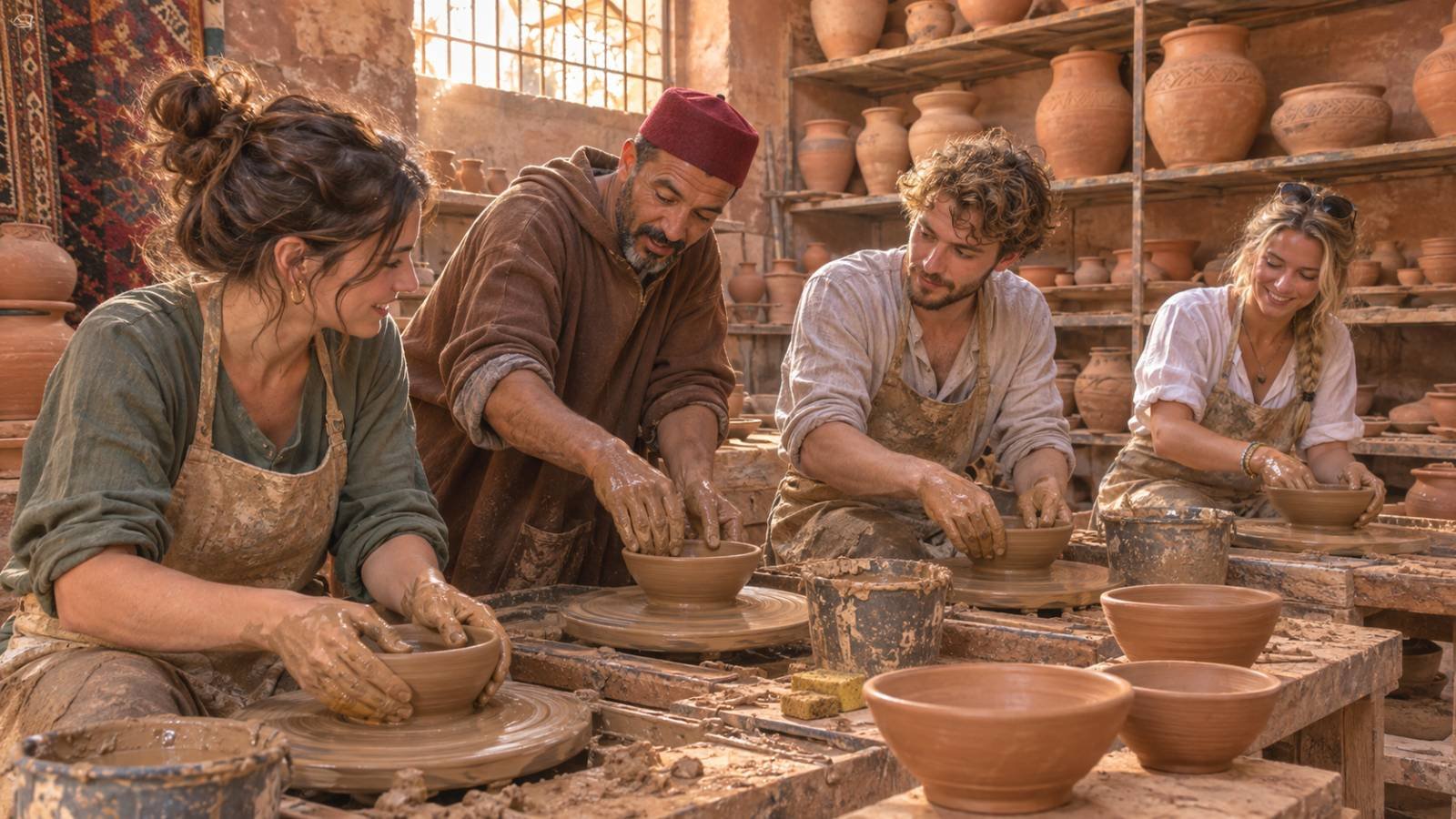

A Marrakech Workshop is one of the rare travel experiences that leaves you with something in your hands rather than just photos on your phone. But between pottery studios tucked behind souk stalls, tagine classes advertised in three languages, and zellige ateliers that open whenever the artisan feels like it, doing it well takes a little planning. This guide walks you through the whole process, step by step, so your session feels like discovery rather than guesswork.
Step 1: Decide What You Want to Make Before You Book a Marrakech Workshop
The single biggest mistake travelers make is booking the first workshop they see. Marrakech offers wildly different crafts, and each one asks something different of you. Pottery is messy and forgiving. Zellige tile work demands patience and precision. Leather tooling rewards steady hands. Cooking is social and fast-paced. Weaving is slow and meditative.
Ask yourself one honest question: do you want to learn a skill or feel the rhythm of a craft? A Marrakech Workshop built around a skill tends to be longer, quieter, and more technical. One built around atmosphere is shorter, louder, and often includes tea and storytelling. Neither is better; they simply suit different travelers.
Match the craft to your group
- Families with children: pottery, painting, or a tagine cooking class
- Couples: leather or zellige, where you can work side by side
- Solo travelers: rug weaving or argan oil sessions, usually smaller groups
- Design lovers: zellige and tile carving, the most visually striking option
Step 2: Choose the Right Atelier, Not Just the Right Price
Price tells you very little on its own. A cheap session can be a genuine neighborhood atelier sharing its craft; an expensive one can be a hotel activity with a token demonstration. Look instead at three signals: who teaches, how many people are in the room, and whether you leave with a finished piece or a half-made one.
Small groups matter more than you think. Six people around a pottery wheel means real attention. Sixteen means you watch. If a listing does not state group size, ask before you pay. And ask where the workshop happens: a studio inside the medina feels completely different from a purpose-built room on the outskirts.
Questions worth sending before you commit
- Who leads the session, and how long have they practiced the craft?
- What is the maximum number of participants?
- Do I take my piece home the same day, or is it shipped later?
- What is included: materials, apron, tea, transport?
- What happens if I need to cancel?
Step 3: Book Smart and Prepare the Day Before
Book directly when you can. Direct booking usually means clearer communication, a better cancellation policy, and a fairer share going to the artisan. Confirm the start time in writing, and note the exact meeting point, because medina addresses are famously approximate and a riad door can hide an entire studio.
The day before, do three small things. Wear clothes you do not mind staining. Bring cash for materials or a tip if card payment is not accepted. And eat properly beforehand: a three-hour pottery session on an empty stomach is a lesson in regret.
Step 4: Arrive Curious and Leave the Perfectionism at the Door
Your first piece will not look like the sample on the wall, and that is the point. Artisans in Marrakech learn over years, often starting as children in a family workshop. Your job is not to match them but to understand what they do with their hands.
Ask questions while you work. Where does the clay come from? How long does the kiln take? Why this pattern and not another? These conversations are the real value of a hands-on session, and most artisans genuinely enjoy explaining their craft to someone who asks with respect.
Practical habits that make the session smoother
- Keep your phone away for the first half hour and actually learn the technique
- Photograph the steps, not just the finished result
- Ask permission before filming the artisan at work
- Buy something small from the studio if you loved it; it supports the craft directly
Step 5: Plan What Comes After Your Marrakech Workshop
The best sessions end with something you can carry. If your piece needs firing or drying, confirm how and when you will collect it, or whether shipping is possible. If you are leaving the next morning, say so at the start, not at the end.
Then give yourself a slow hour afterwards. Sit somewhere quiet with mint tea and let the craft settle. Travelers who rush from a workshop straight into a souk walk often remember the crowds and forget the clay.
If you want to see how a well-planned session fits into a wider day of exploring the medina, the curated options on this Marrakech Workshop guide show how to build an afternoon around one craft instead of scattering your energy across ten stops.
Final Thoughts: Small Hands-On Sessions, Lasting Memories
A workshop is not a souvenir stop; it is a conversation with a craft that has been practiced in this city for centuries. Choose the craft that genuinely interests you, ask the right questions before booking, arrive ready to be a beginner, and plan the hours around your session so nothing feels rushed. Do that, and your Marrakech Workshop becomes the part of the trip you talk about long after the photos fade.
#MarrakechWorkshop #WorkshopMarrakech #HandsOnMarrakech #LearnMoroccanCrafts #MarrakechExperiences #MoroccanCrafts #CulturalTravel #MarrakechInsider
0 Comment