


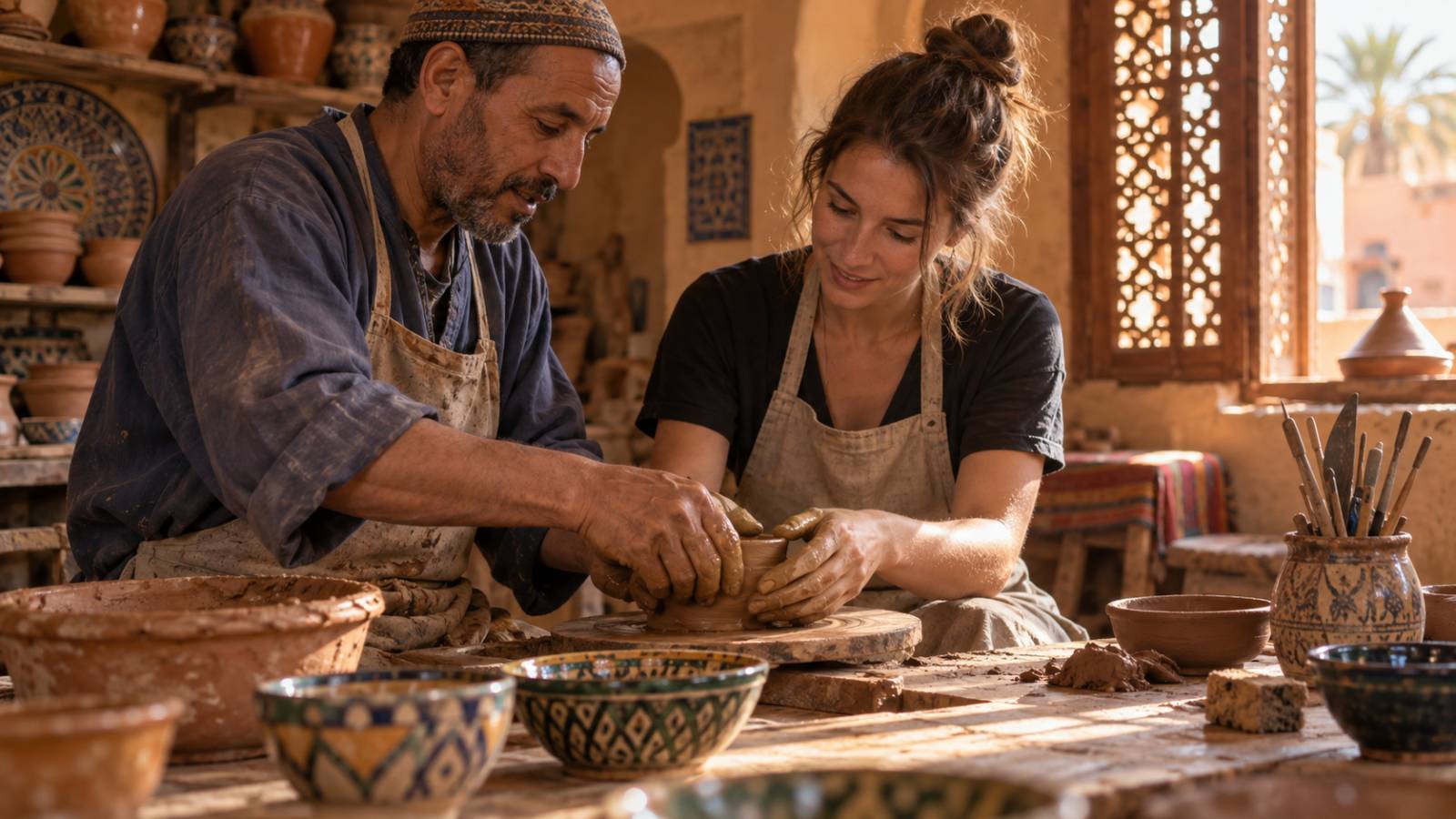

A Marrakech Workshop is one of the few travel experiences where you leave with something you made yourself — a glazed bowl, a pair of babouches, a pot of argan cream. But the difference between a magical afternoon and a wasted one rarely comes down to luck. It comes down to preparation. Below is a practical, step-by-step checklist you can work through before you sit at the artisan’s bench.
Before You Book: The Marrakech Workshop Prep Checklist
1. Decide what you want to make
Craft sessions in the medina fall into a few families: pottery and zellige tile work, leather, cooking, argan oil, and rug weaving. Each demands different energy. Cooking is social and fast; pottery is slow and meditative; leather work is technical. Pick the one that matches your mood, not just the photos you saw online.
2. Match the session length to your day
- 60–90 minutes: ideal for a taster session or a family stop.
- 2–3 hours: the sweet spot for actually finishing a piece.
- Half day or more: choose this only if you want depth and don’t mind skipping other sights.
3. Check whether you take the piece home
Some studios let you carry your work out the same day; others fire it in a kiln and ship it later. Ask directly. If shipping is involved, confirm who pays and how long it takes.
4. Confirm the language of instruction
Most workshops run in French, English or Arabic. A hands-on craft is hard to follow through translation alone, so verify before you commit.
5. Ask how big the group is
Six to eight people is comfortable. Anything above twelve usually means less hands-on attention and more watching.
6. Read the fine print on materials
Clay, leather, silver and dyes are not free. A clear Marrakech Workshop listing should state whether materials are included or charged separately.
On the Day: A Simple Arrival Routine
7. Leave a buffer for the medina
Alleys in the old city don’t follow a grid. Add twenty minutes to whatever your maps app suggests, and keep the studio’s phone number saved offline.
8. Dress for mess
Wear clothes you don’t mind marking. Aprons are usually provided, but sleeves and shoes are not always protected.
9. Bring cash in small notes
Cards work in some studios, not all. Small dirham notes also make tipping the artisan easy and gracious.
10. Ask permission before photographing
Artisans are often happy to be filmed — but ask first, and put the phone down once the real work begins. You’ll learn more with your hands than through a lens.
Getting the Most From the Bench
11. Ask about the craft, not just the steps
The best sessions are conversations. Ask how long it takes to master a glaze, where the clay comes from, or how a family workshop passes skills down. This is where a Marrakech Workshop turns into a genuine cultural exchange rather than a souvenir transaction.
12. Finish, sign, and follow up
Before you leave, check the piece is sound, ask how to care for it, and note the studio’s contact for shipping questions. If you loved it, a short message afterwards is always welcome.
Quick Red Flags Worth Watching
- No clear price per person, or a vague “materials extra” with no figure.
- Groups larger than advertised.
- No demonstration before you’re handed tools.
- Pressure to buy finished goods at the end.
None of these are deal-breakers on their own, but two or three together usually mean you should walk on. Compare a few options through a trusted hands-on Marrakech Workshop guide before committing.
The Takeaway
A craft session in the red city rewards a little planning. Choose the right craft, confirm the practical details, arrive early, and engage with the person teaching you. Do that, and you’ll leave with far more than an object in your suitcase — you’ll leave with a story about the day you made something in Marrakech.
#MarrakechWorkshop #WorkshopMarrakech #MoroccanCrafts #ArtisanExperiences #ThingsToDoInMarrakech #MarrakechInsider #CulturalExperiencesMarrakech #HandsOnMarrakech #MoroccoPlan
0 Comment