


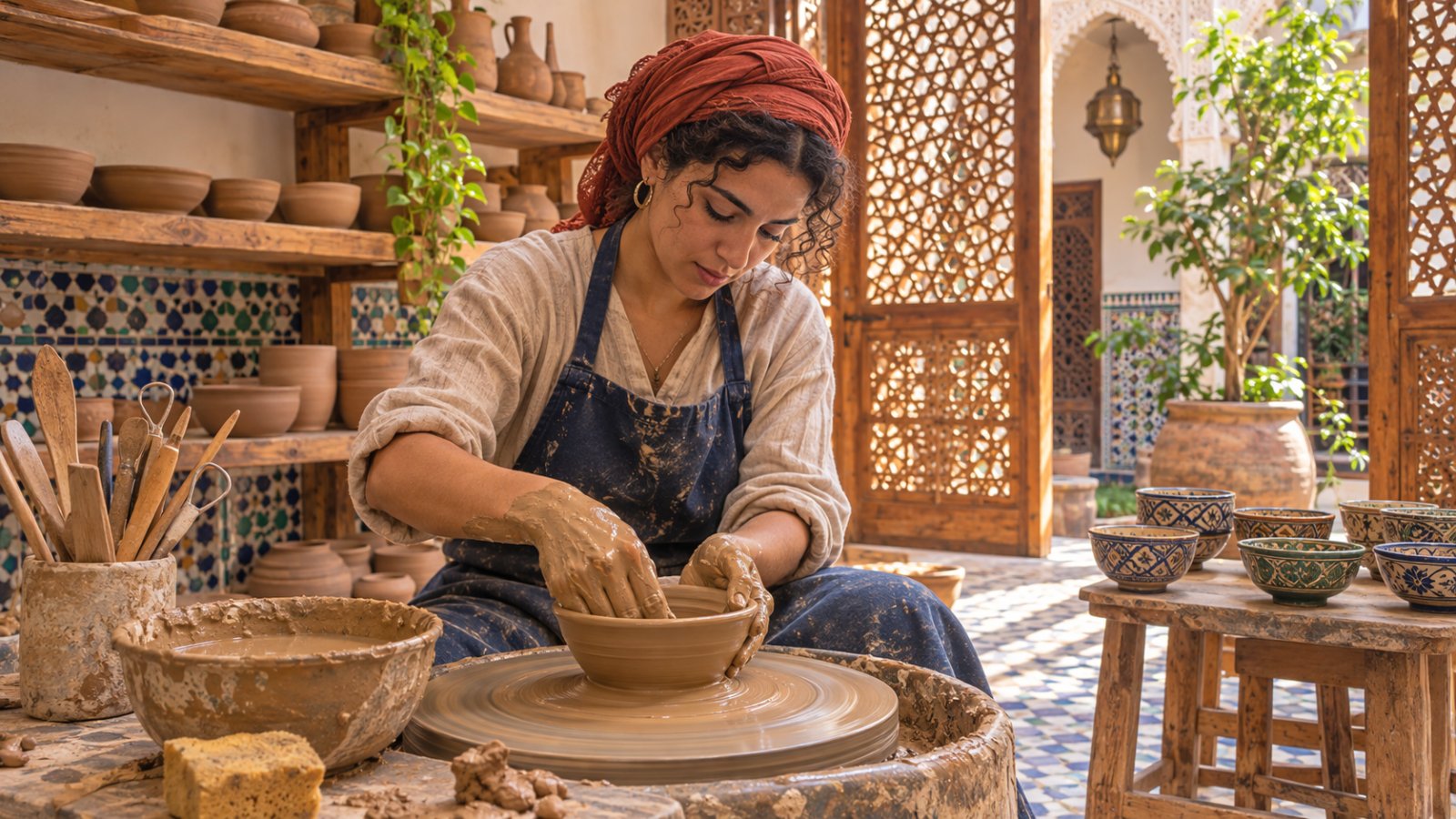

Booking a hands-on craft or cooking session is one of the most rewarding ways to slow down. It also connects you with Moroccan culture. But before you commit, you probably have questions. Below are the ones travelers ask us most often about a Marrakech Workshop. The answers are plain, so you can decide with confidence.
What Exactly Is a Marrakech Workshop?
A Marrakech Workshop is a guided, hands-on session with a local artisan or cook. You learn a traditional skill in a small group. Think pottery, zellige tilework, leather tooling, rug weaving, argan oil pressing or a tagine cooking class. You leave with something you made yourself. You also gain a deeper understanding of Moroccan craft than any museum visit can give you.
Is it a class or a demonstration?
Most reputable sessions are genuinely participatory. You shape clay, cut leather or knead dough yourself. The artisan guides your hands along the way. If you only want to watch, ask in advance. A few studios offer observation-only visits at a lower price.
How Long Does a Typical Session Last?
Duration varies by craft, but here is the honest range:
- Short taster sessions: 1.5 to 2 hours, ideal if your itinerary is packed.
- Standard workshops: 2.5 to 4 hours, the sweet spot for finishing a piece.
- Cooking classes: 3 to 5 hours, including souk shopping and the meal you share.
- Full-day immersions: 6 hours or more, often combining two crafts or a countryside visit.
Add buffer time for transfers. Medina traffic and narrow alleys slow everything down. A ten-minute drive on a map can take far longer on the ground.
Do I Need Any Experience or Skill?
No. Sessions are designed for complete beginners. That includes children and travelers who have never held a potter’s wheel or a chisel. Artisans are used to teaching first-timers. They adjust their pace to the group. What matters more is your willingness to get your hands dirty, literally.
What about language?
Most workshops run in French, English or Spanish, and often a mix. Confirm the working language when you book. You do not want to be the only person in the room who cannot follow the instructions.
How Much Should I Expect to Pay?
Prices reflect materials, the artisan’s time and group size. Smaller groups cost more per person but give you far more attention. Be cautious of offers that seem dramatically cheaper than everything else. They often mean large groups, rushed teaching or hidden material fees. Ask directly whether materials, tools, refreshments and the finished piece are included in the quoted price.
Where Do These Workshops Take Place?
Many studios sit inside the medina, tucked into courtyards you would never find alone. Others are in the Palmeraie or in cooperative workshops just outside the city. There, local women’s associations produce argan oil and woven textiles. A well-organized Marrakech Workshop includes clear meeting instructions. A vague address in the old town is not helpful to anyone.
Will I Be Able to Take My Creation Home?
Usually yes, but the practical details matter. Pottery needs firing and drying, which can take days. Many studios offer shipping or a later pickup. Leather, textiles and small ceramic pieces are easier to carry. Ask about packaging and shipping costs before you start. That matters most if you are flying home with limited luggage space.
When Is the Best Time to Book?
Reserve several days ahead in busy travel seasons. Book at least a week ahead for cooking classes that include market shopping. Ingredients and group sizes are planned in advance. Morning sessions tend to be calmer and cooler. Afternoon light is beautiful for photography in open-air studios.
Can I Combine a Workshop With Other Activities?
Absolutely. A morning session pairs well with an afternoon in the souks or a garden visit. Many travelers build a full cultural day around one craft class. If you want help structuring that, browse the curated hands-on Marrakech Workshop experiences. Match one to your energy level and your schedule.
What Should I Bring and Wear?
Wear clothes you do not mind staining. Closed shoes are wise for studios with kilns or sharp tools. Bring a small notebook if you want to record techniques. Carry cash for a tip or a small purchase. Avoid loose sleeves near wheels and open flames.
Conclusion
The best workshop is the one that fits your curiosity and your calendar. It is not the one with the flashiest photos. Ask about group size, materials, language and timing. Then choose the craft that genuinely interests you. Do that, and a few hours in a Marrakech studio will become a lasting memory.
#MarrakechWorkshop #WorkshopMarrakech #ThingsToDoInMarrakech #MoroccanCrafts #CulturalExperiencesMarrakech #MarrakechInsider #AuthenticTravel #LocalArtisans
0 Comment