


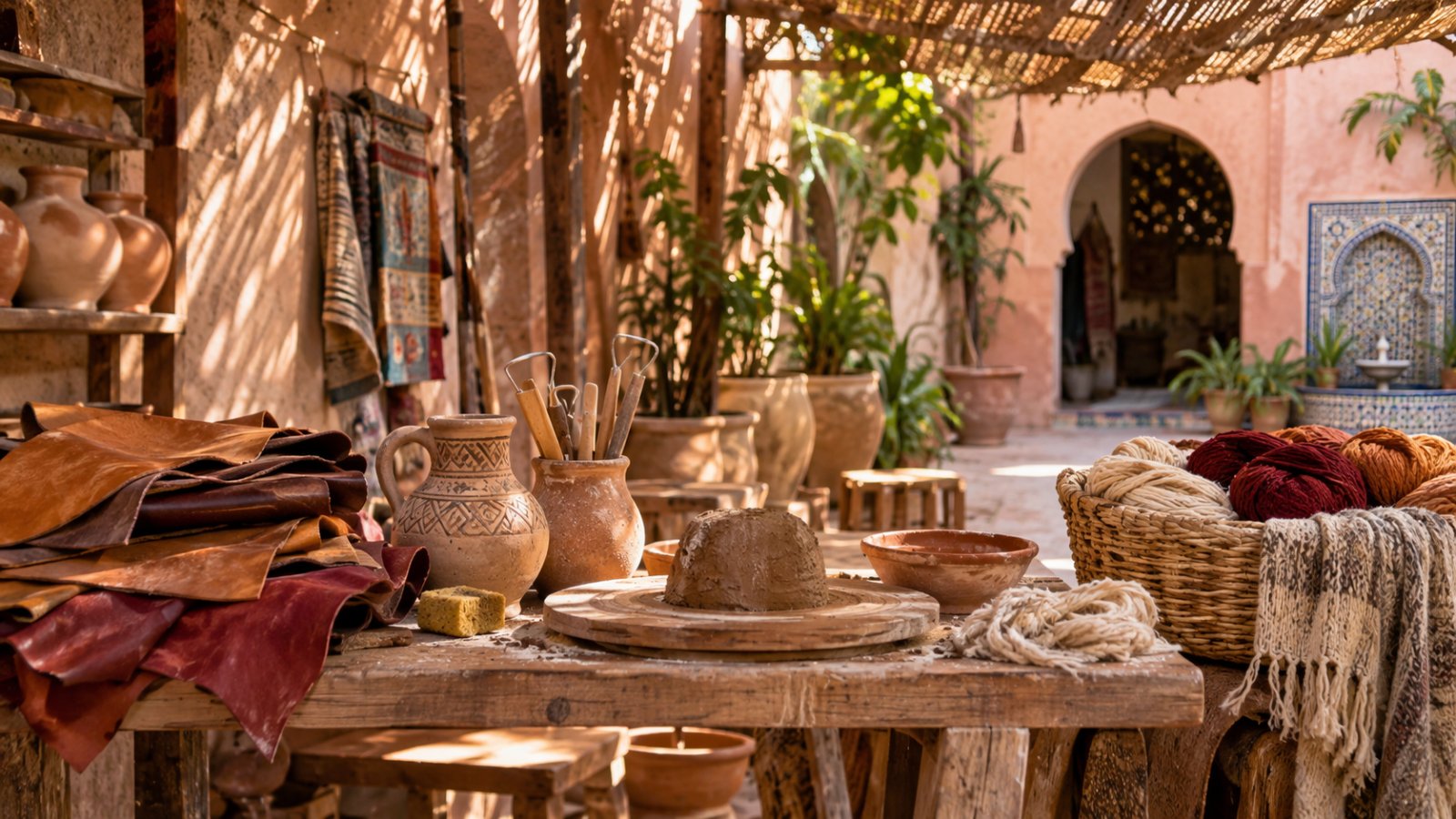

A Marrakech Workshop is one of those travel decisions that looks simple from the outside and turns complicated the moment you start comparing options. Which craft? How long? Where in the medina? Do you need to book ahead? Below are the questions our guests ask most often, answered plainly, so you can decide with confidence instead of guesswork.
What exactly is a Marrakech Workshop, and who is it for?
A workshop is a hands-on session led by a local artisan or cook, where you make something yourself rather than watch from a distance. For example, think pottery on a wheel, zellige tilework, leather cutting and stitching, argan oil pressing, rug weaving, or a tagine cooking class in a riad kitchen.
It suits almost anyone: solo travelers, couples, families, and friends traveling together. However, no prior skill is required, and the best sessions are built for beginners and adapt to the pace of the group.
Is it a class or a demonstration?
Both exist, and the difference matters. A demonstration is mostly observation, while a workshop means your hands are working. Therefore, if you want to leave with something you made, ask this question before booking.
How do I choose the right Marrakech Workshop for me?
Start with what you already love. If you cook at home, a tagine or bread-baking session will feel natural. Meanwhile, if you collect textiles, weaving or dyeing is the obvious pick. If you are drawn to architecture, zellige and plaster carving will make the city’s buildings suddenly readable.
- Time: short sessions of one to two hours versus half-day immersions
- Group size: small groups mean more attention from the artisan
- Language: confirm the session is taught in a language you follow comfortably
- Takeaway: some crafts let you keep the piece, others ship it later
- Location: a medina atelier adds atmosphere but also walking time
You can browse curated, locally led options on our Marrakech Workshop page and compare formats side by side.
Do I need to book in advance?
In busy travel periods, yes. Small ateliers have limited benches and tools, so a session that fits eight people cannot absorb a walk-in group of five. Consequently, booking a few days ahead is usually enough; for cooking classes and anything involving a market visit, a week or more is safer.
If your schedule is flexible, ask whether a morning or late-afternoon slot is quieter. In addition, mornings often mean fresher ingredients and cooler ateliers.
Can I book the same day?
Sometimes, especially for shorter pottery or leather sessions. Still, it depends entirely on the artisan’s calendar that day. So message directly rather than assuming.
What should I expect on the day?
Arrive early, because finding a door in the medina takes longer than the map suggests. Also, wear clothes you do not mind marking, and skip loose sleeves or dangling jewelry around wheels and tools. Most workshops provide aprons, materials, and water.
Expect a slower rhythm than a museum visit. Indeed, craft is learned by repetition, and the pleasure is in the doing.
Is a Marrakech Workshop good for families and children?
Often, yes. Pottery, painting, and simple cooking sessions work well with children because the results appear quickly. By contrast, weaving and fine leatherwork demand more patience and are better for older kids or adults. Always tell the organizer the ages involved so the artisan can prepare.
How much time should I set aside?
Count more than the session itself. Add walking through the souks, a possible market visit, tea at the end, and the chance you will want to linger. As a result, a two-hour workshop can comfortably fill half an afternoon.
If you are building a full day around it, pair your session with a gentle city experience such as a tuk tuk ride or a garden visit. Meanwhile, our hands-on Marrakech Workshop options are designed to slot into a realistic itinerary rather than swallow it.
What do travelers most often get wrong?
Three things come up again and again: overbooking the day, choosing a session purely on price, and forgetting that materials cost money. In short, a cheap workshop that rushes twenty people through a doorway is not the same product as a small atelier session with real tools.
Ask what is included, how many participants there will be, and whether the artisan speaks during the work or only at the start. Those three answers tell you more than any photo.
The bottom line
A good Marrakech Workshop is not a souvenir stop. Instead, it is the hour or two where the city stops being scenery and becomes something you participated in. Therefore, ask the practical questions early, choose the craft that genuinely interests you, and leave room in your day for the unexpected conversation that follows.
#MarrakechWorkshop #WorkshopMarrakech #ThingsToDoInMarrakech #MoroccanCrafts #CulturalExperiencesMarrakech #HandsOnMarrakech #MarrakechInsider #LocalArtisans #AuthenticTravel #MoroccoPlan
0 Comment