


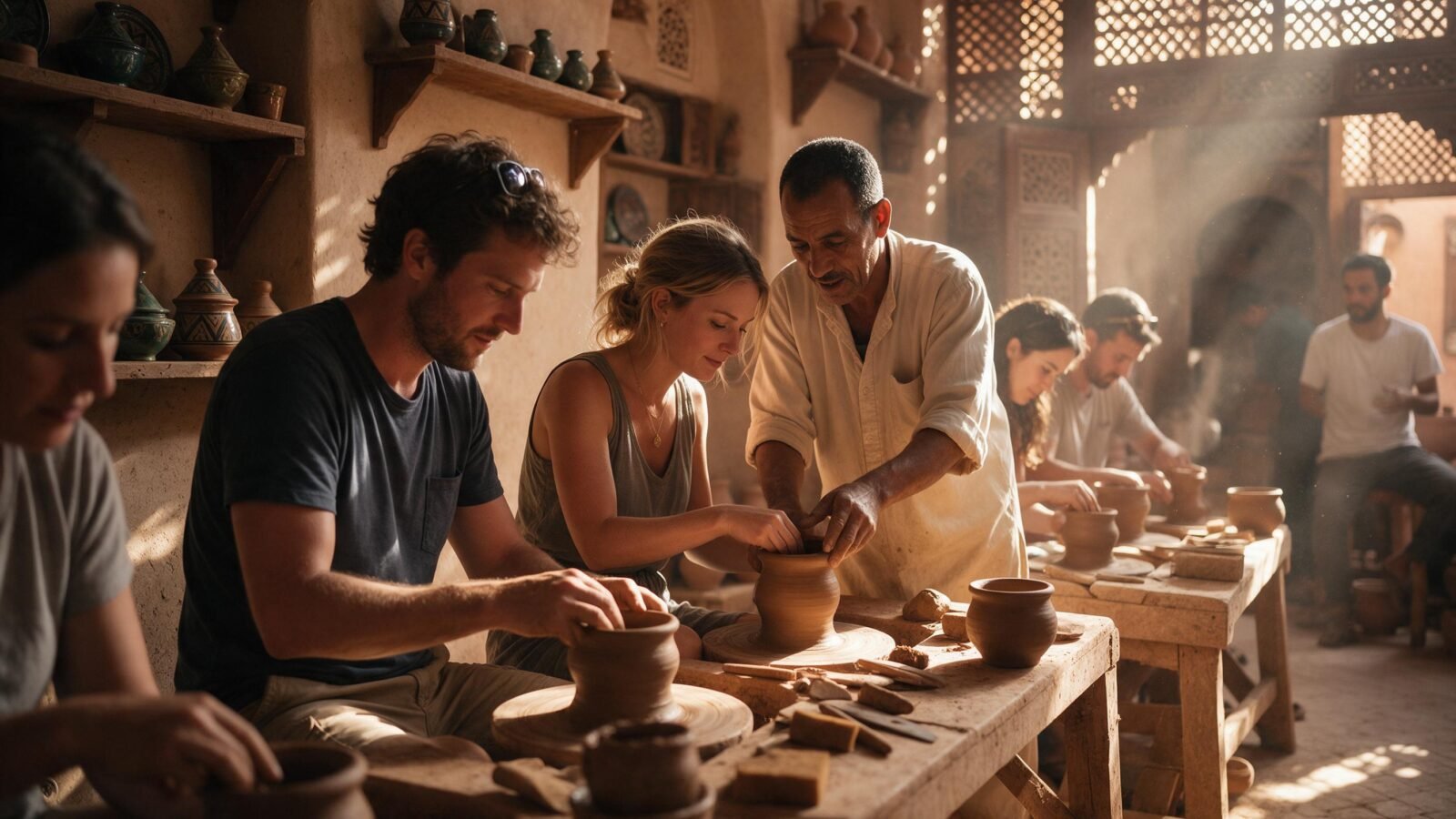

Anyone can wander the souks and snap a few photos, but a genuine Marrakech Workshop turns a holiday into a skill you carry home. After years of guiding travellers through the medina, I’ve learned that the difference between a forgettable afternoon and a life-changing one comes down to a handful of expert choices. This guide shares those choices, so you can book with confidence and get your hands dirty in the best possible way.
Start With Your Curiosity, Not the Price Tag
The best Marrakech Workshop is the one that matches what genuinely excites you. Ask yourself a simple question before you compare listings: do I want to taste, shape, weave, or smell? Each answer leads somewhere different.
- Taste: a tagine cooking class in a riad courtyard, where you shop the spice stalls first.
- Shape: a pottery or zellige session in the pottery district outside Bab Yacout.
- Weave: a Berber rug weaving demonstration with a cooperative in the Atlas foothills.
- Smell: an argan oil workshop where women’s cooperatives explain cold-pressing by hand.
When your motivation is clear, the marketing noise fades and the right artisan appears.
How to Spot an Authentic Marrakech Workshop
Small groups beat big promises
Expert rule number one: if a workshop accepts thirty people at once, you will watch rather than do. Look for a maximum of eight to twelve participants. You should be able to hold the tools, ask questions, and make mistakes without waiting in line.
Ask who actually teaches
A master artisan, a family workshop, or a trained chef with local roots is a good sign. A rotating roster of freelancers is not. Send a quick message and see whether the reply names a person and a craft. That single exchange tells you more than any glossy photo.
Check the materials policy
Quality workshops include clay, leather, silver, or ingredients in the price. Cheap ones charge extra on arrival, which sours the mood. Confirm whether you keep what you make, and how it will be packed for the flight home.
Where to Go Beyond the Medina
Some of the most rewarding experiences sit just outside the walls. The Marrakech Workshop scene extends into the Palmeraie, where leather tanneries and weaving ateliers welcome visitors in the cool morning hours. In the Ourika Valley, a day trip combines Berber hospitality with hands-on bread baking and rug knotting. These settings are quieter, cooler, and often cheaper than the central medina.
If you prefer a guided route that links several artisans in one day, a curated cultural experience in Marrakech can save you hours of negotiation and guesswork.
Timing, Comfort, and Practical Wisdom
Book the right slot
Morning sessions from 9 to 11 a.m. are cooler and calmer. Sunset sessions suit cooking classes, especially when the call to prayer drifts over the rooftops. Avoid Friday afternoons, when many family workshops close for prayer.
Dress and prepare
Wear clothes you don’t mind staining, tie back long hair, and bring a bottle of water. For clay and dye work, closed shoes are essential. Leave rings and bracelets at the riad.
Budget realistically
Expect roughly 250 to 600 Moroccan dirhams for a two-to-three-hour session, more for full-day courses with meals. Tipping the instructor is appreciated but never obligatory.
Common Mistakes First-Timers Make
- Booking through a hotel concierge without checking the group size.
- Choosing a workshop purely because it is closest to Jemaa el-Fna.
- Forgetting that finished pottery needs days to dry before shipping.
- Arriving without cash, since many small ateliers do not accept cards.
Avoid these and your session will run smoothly from the first handshake to the final photo.
Make It Part of a Bigger Story
Pair a workshop with a TukTuk ride through the Palmeraie at golden hour, or a Majorelle Garden visit the same morning. Craft and landscape belong together in Marrakech. When you learn how zellige is cut, the tiles of every palace suddenly mean more. When you knead dough beside a Berber grandmother, every tagine tastes deeper.
That is the real value of hands-on travel: it converts sightseeing into understanding, and souvenirs into stories you can actually tell.
Final Expert Advice
Choose one workshop, not five. Depth beats quantity every time. Book directly when you can, ask about group size, and arrive curious rather than camera-first. Do that, and your Marrakech Workshop will be the memory you talk about for years, long after the souvenirs have faded.
0 Comment